


“Let’s make a circle and then we can get started.”
A few chairs scoot. Most don’t.
We’re about to begin a community forum, but our carefully prepared setup is already starting to unravel. We had arranged chairs in a big, open circle in the middle of the room. But as people trickled in, that circle dissolved.
On one side, a small group who arrived together has formed a line along the back wall. Across from them, an awkward inner-circle–outer-circle pattern has emerged. A few people are standing off to the side, half-leaning against the wall—keeping their options open for a quick escape.
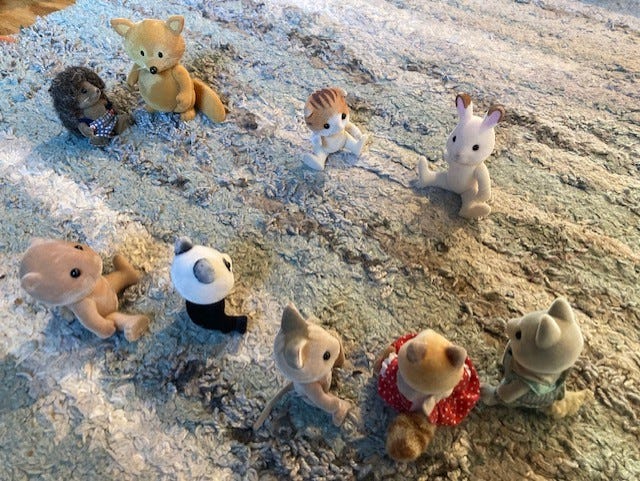
This is classic human behavior. Pretty funny, usually. But we’re here for social learning—for listening, sharing, and co-creating. We need to do better.
So I take it up a notch.
“If you can’t see everyone’s face in the circle, scoot around so you can! If you’re staring at the back of someone’s head, you’re not in the right spot. There are no second-class citizens in social learning!”
This gets a few laughs. Then, movement. Backpacks and coats shift. People rise, chairs scoot to fill gaps. The circle forms again.
“Ahh…” I say. “Now we’re set up for success.”
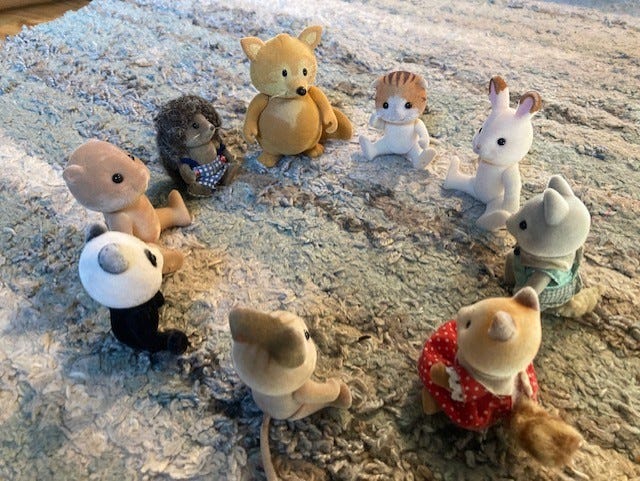
You might try creating and defending circles.
The circles, or circle-ish things (as I often say), that you create for people to learn together are essential. Fail to create and defend them, and all your other carefully laid convening plans might flop.
This doesn’t mean everyone has to be in every conversation. It means that people shouldn’t be pushed (or allowed to drift) to the edges — literally or metaphorically — when it’s time for mutual, shared engagement.
Pull folks in. Once they’re there, use language that signals shared belonging: member, contributor, fellow, person. Frame introductions around intentions and relationships, not ranks and categories. If we’re really going to learn together, we each need a secure place in the circle.


So…
What convening design elements of yours are worth defending?
I can’t wait to hear your story.
Reply to this email, or leave a comment below.
More soon.
Cheers,
Travis
The Joy of Convening explores how we can facilitate learning and connection across boundaries — with purpose, playfulness, and care.
Follow along for tools, stories, and conversations that help us convene with more joy and impact.


