

Sometimes our efforts to include all voices work in ways we haven’t anticipated.
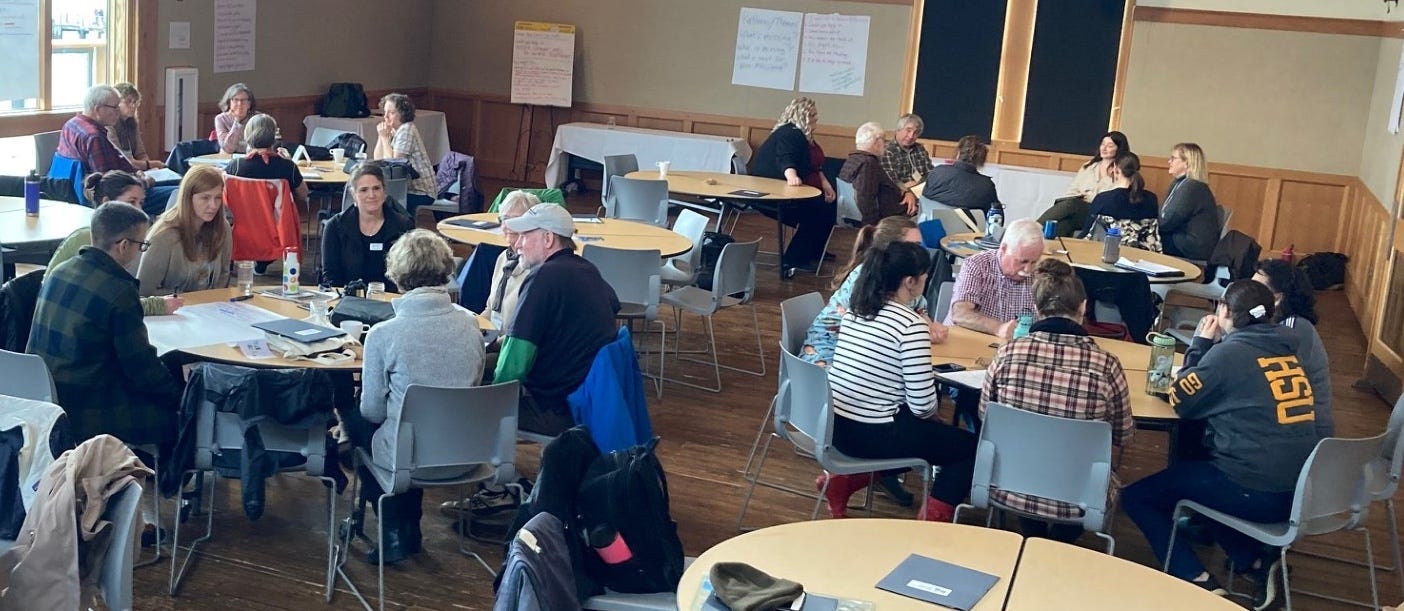
A few days after a lovely convening in Port Townsend with dozens of marine stewards, advocates, and scientists, this message arrived in my inbox [my bold for emphasis]:
“Hope this finds you well. I was one of the hundred+ attendees at last weekend’s Northwest Straits conference who participated in your design clinic activity. I’m also autistic, so I just wanted to share in case you’ve never heard it before – this format is the most neurodivergent-friendly group discussion technique I’ve ever experienced.
The defined structure that is meant to keep most people from jumping to poorly-thought-through advice also functions beautifully for the autistic brain to feel comfortable in the conversation.
Because I didn’t have to think about what kind of things were appropriate to say when, or track a complex social structure in the conversation – the format did all that work for me – I could concentrate on contributing high quality input.
I just thought I’d share in case that benefit of your work wasn’t something you’d previously considered.
They continued:
“My partner and I are both neurodivergent and we often struggle to keep focus and structure when we’re trying to collaborate to fix issues in the home/relationship. I came home and suggested to him that we adapt this format for two people to improve the structure of those conversations – we’re still working through exactly what that looks like, but it’s definitely a step in the right direction.”
Wow. I’ve loved design clinics for a long time because they so effectively mobilize the wisdom in a group, foster empathy, support equitable sharing, and generate practical steps forward.
Now I had another reason to love them.
You might try structuring for inclusion.
It’s easy to say we care about things like equity, belonging, inclusion, and so forth.
I believe it when I see it.
Too often, people and organizations that say they care about such things but structure gatherings — parties, discussions, committees, classes, working groups — in ways that reinforce or exacerbate hierarchies and social separation (or do (next to) nothing to address or break down these barriers). This leaves people on the margins pushed further out, rather than welcomed in.
Instead, we can choose methods that center our shared humanity, interests, and potential to learn together. We can signal our delight and gratitude that each person is in the room, and our confidence that they’ll contribute meaningfully if given the chance.
We have more power than we might think, and tons of resources, advice, and examples to help us structure for inclusion. There’s no excuse. Practice with the vast variety of Liberating Structures. Take Priya Parker’s good advice not to be a “chill host” (abdicating your convening duties and leaving people adrift). Dive deep into the rich guide for communities of practice provided by Beverly and Etienne Wenger-Trayner, Phil Reid, and Claude Bruderlein. It’s full of practical examples and tips to transform your gatherings for the better.
And for heaven’s sake (as my Dad would say), start using design clinics! In addition to the fabulous video above, here are a few resources to get you started:
Design Clinic Description/Format (one-page double sided)
Crafting an Effective Design Clinic Request (one-page single side)
Note: Our current design clinic practice (expressed in the document above) integrates Talk Tiles into steps #4 and #7, which varies from steps #4 and #7 presented in the video. Both approaches work well. For the bold — integrate both sets of prompts for an elaborate 9-step design clinic (and tell me how it goes)! See what works best for you and your groups. There’s no perfect way — just be purposeful as you experiment.
To really dive deep into the evolution, philosophy, and practice of design clinics, you might enjoy this interview-style article Ruth Benander, Brenda Refaei and I put together:
The Evolution and Practice of Design Clinics: An Interview with Travis Tennessen (13 pages)
So…
What methods & structures most help you build inclusion?
I can’t wait to hear your story.
Reply to this email, or leave a comment below.
More soon.
Cheers,
Travis
The Joy of Convening explores how we can facilitate learning and connection across boundaries — with purpose, playfulness, and care.
Follow along for tools, stories, and conversations that help us convene with more joy and impact.


